Digital Boundary

Zion Campbell’s lens on how we inhabit, resist, and reimagine networked spaces.
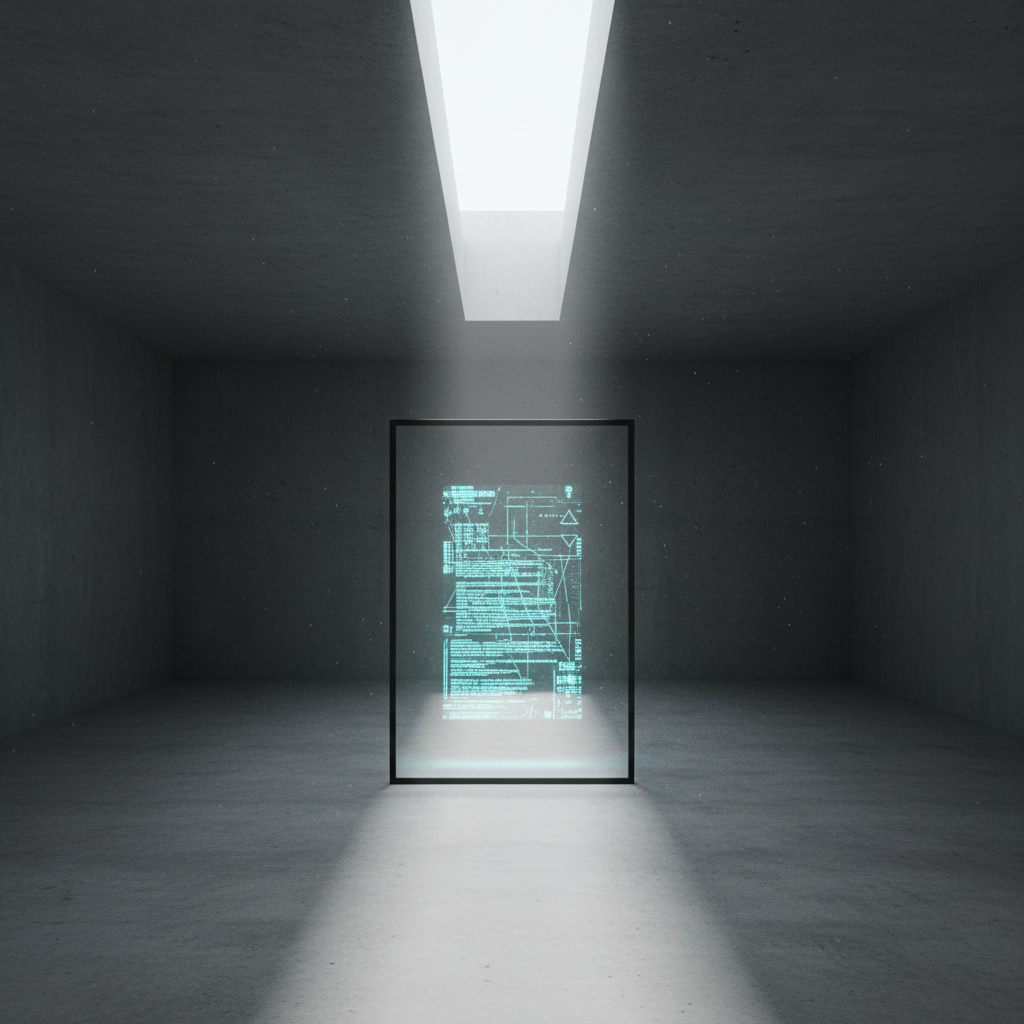
A minimalist black metal frame, shaped like a doorway, stands alone in an expansive, matte concrete room. Within the frame floats a perfectly rectangular panel of glowing cyan code and geometric interface lines, hovering just above the ground. Outside the frame, the same floor extends in neutral gray, unmarked and empty. A single, narrow skylight above casts a sharp rectangle of cool daylight that aligns perfectly with the digital panel, leaving the rest of the room in soft shadow. Photographic realism with a wide-angle lens, straight-on composition, emphasizing symmetry. Fine dust particles are faintly visible in the light beam, adding texture. The atmosphere is solemn, sophisticated, and almost gallery-like, turning the digital threshold into a sculptural object.

Writings

Manifesto

Pinned reflections on where code, cameras, and human memory collide at the edge of the digital self.
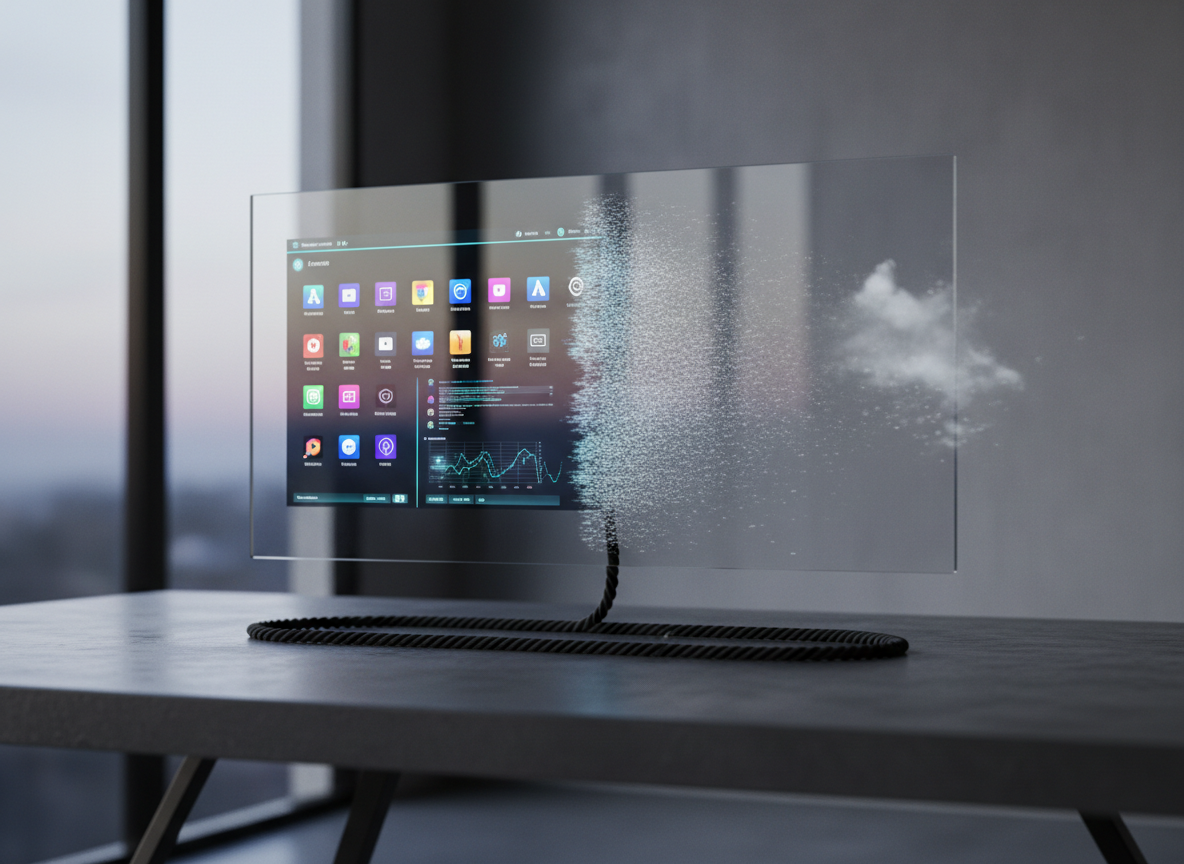
A sleek, frameless glass monitor floats above a charcoal-gray concrete desk, its screen split cleanly down the center. One half glows with vivid, saturated icons and sharp interface elements, the other half fades into a grainy, monochrome static that seems to dissolve into the surrounding air. The desk is meticulously bare except for a single, coiled black cable resting like a boundary line. Soft, diffused twilight seeps in from an unseen window, casting faint reflections on the glass surface. Photographic realism, eye-level composition with a shallow depth of field, emphasizing the sharp digital edge as it blurs into analog noise. The mood is contemplative and sophisticated, hinting at the threshold between virtual clarity and real-world ambiguity.